Some analysts are heralding the meeting as a sign of renewed commitment to peace and cooperation between the U.S. and China. Are they right?
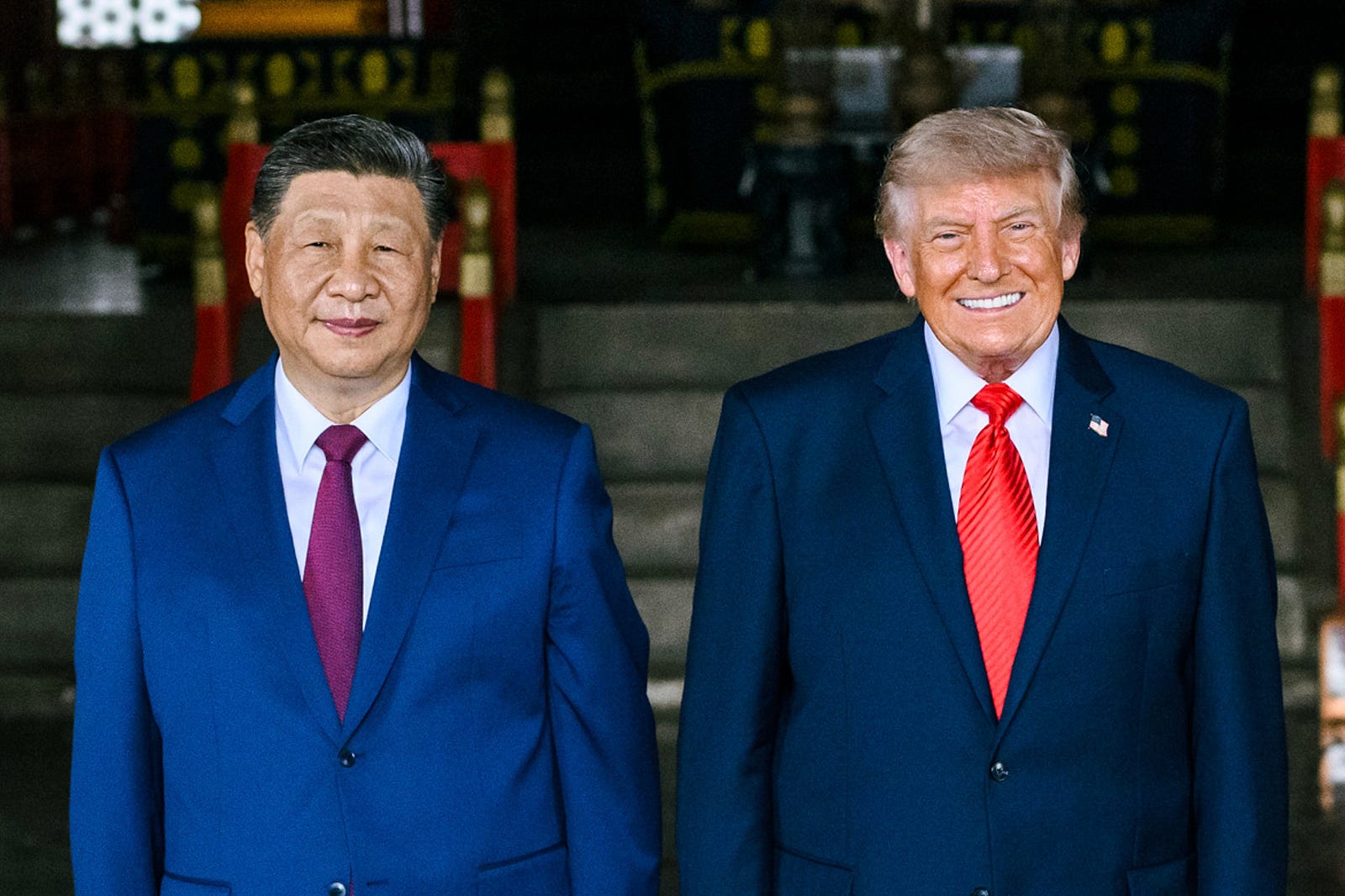
Maybe Trump and Xi really did reset the geopolitical chess board.
Of course, America and China are not suddenly best friends. The Chinese Communist Party has not suddenly become trustworthy. Taiwan is not safe because two powerful men smiled for the cameras. Iran is not contained because Beijing and Washington used the same sentence about nuclear weapons.
But something important may have happened in Beijing.
For the last several years, U.S.-China relations have felt like a slow-motion collision. Trade fights. Rare earth threats. Taiwan pressure. Spy balloons. Sanctions. Export controls. Military tension. China growing more aggressive, America growing more suspicious, and the rest of the world trying to guess which crisis would come first.
Then Trump went to China, sat down with Xi Jinping, and both sides came out talking about stability.
According to the White House, Trump and Xi agreed that the United States and China should build a “constructive relationship of strategic stability” based on fairness and reciprocity. The two countries also agreed to establish new boards of trade and investment, while China committed to purchases of American agricultural products, Boeing aircraft, and renewed access for some U.S. beef and poultry exports.
That is not world peace. But it is not nothing.
The optimistic view is that Trump may have moved the relationship out of chaos and into bargaining. That is a very Trumpian concept. He is not trying to make China like us. He is trying to make China deal with us. Fewer lectures. More leverage. Fewer abstract summits. More purchase commitments. Less drift. More direct negotiation.
Some analysts are reading the summit exactly that way: not as a full repair of U.S.-China relations, but as a move toward managed competition. CSIS analysts noted that both sides appear to want a more stable relationship in which differences are managed, while CFR’s briefing described the economic relationship as stabilized temporarily, even if not truly repaired.
A repaired relationship means trust, however. A stabilized relationship means guardrails. Between the United States and Communist China, guardrails may be the more realistic goal.
The Iran angle is especially interesting. The White House says Trump and Xi agreed Iran cannot have a nuclear weapon, called for reopening the Strait of Hormuz, and agreed that no country or organization should be allowed to charge tolls there.
That is actually huge.
China needs energy stability. Trump needs pressure on Iran. The Gulf needs shipping lanes. Markets need oil to move. If Beijing has finally decided that the Iran crisis is bad for Chinese interests too, that could give Trump a lever the West does not normally have. China has relationships, access, and pressure points with Tehran that the United States simply does not.
This is the best argument for the summit as a true geopolitical reset: Trump may be trying to align China’s self-interest with America’s immediate security goals. Not because China is noble. Because China needs commerce, fuel, stability, and access to markets.
That is how diplomacy often works. Not through moral conversion, but through overlapping interests.
There are reasons to be cautious. China has a long history of making promises that sound better in the announcement than they look six months later. Some of the economic pieces still need details, enforcement, and actual follow-through. A purchase commitment is only as meaningful as the shipment that arrives. A trade board is only useful if it prevents the next round of retaliation.
And then there is Taiwan.
Taiwan remains the danger zone in every U.S.-China conversation. After the summit, Taiwan’s president publicly insisted that Taiwan would not be “sacrificed or traded away” amid concern over Trump’s comments about a pending U.S. arms package.
That is the question underneath all the happy language. Is stability being built on strength? Or is China trying to make “stability” mean American hesitation?
If Trump is using the summit to make China buy American goods, pressure Iran, reopen Hormuz, and lower the risk of global economic shock, then this is a very good sign. It would be a classic Trump move: transactional, unsentimental, and wildly useful.
But if Beijing reads the meeting as proof that America is willing to soften its posture on Taiwan in exchange for trade announcements and diplomatic calm, then the reset could become dangerous very quickly.
So are the optimists right?
Partly, yes.
This was a good sign because talking is better than drifting toward war. Trade is better than retaliation. Managed rivalry is better than accidental escalation. If Trump and Xi have decided that the next phase of U.S.-China relations will be competitive but controlled, that is a meaningful improvement.
But it is not a new era yet.
A new era requires follow-through. China has to buy what it promised. Iran has to feel pressure. Hormuz has to reopen safely. Taiwan cannot be treated like a bargaining chip. And the United States has to remember that stability with China is useful only if it is built on American strength.
Maybe Trump and Xi reset the chess board.
Now we find out who understands the game.
(Contributing writer, Brooke Bell)